
Your Tap Water Starts in a Locked Forest
A closed forest, a gravity-fed supply, and a filtration plant that ends a century of treatment-free purity: Portland's Bull Run system is being rebuilt for the next rulebook.
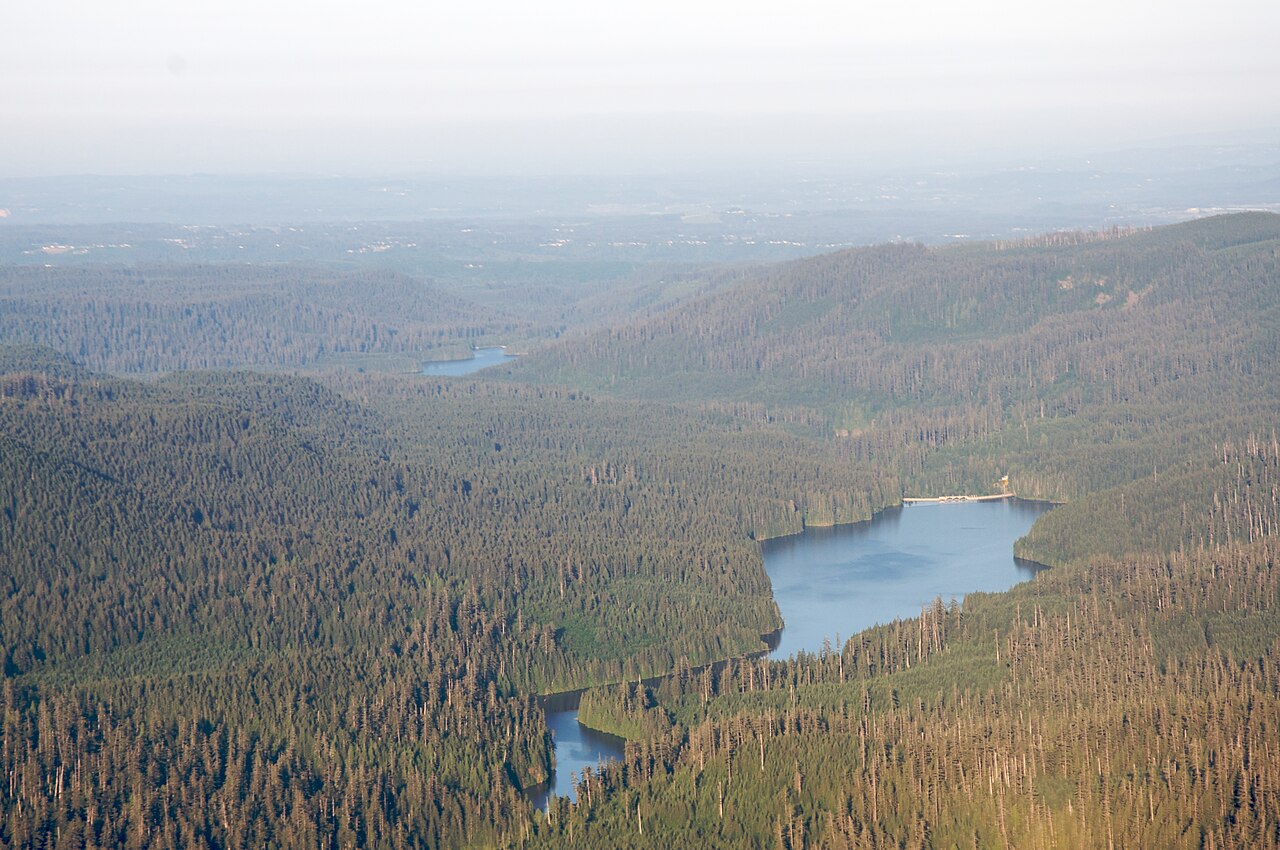
Portland's drinking water begins behind a locked gate. The Bull Run Watershed, 102 square miles of federally protected forest on Mount Hood's western slope, has been closed to public entry since the nineteenth century — one of the very few water sources in America protected not by treatment alone but by absence: no towns, no farms, no recreation, just rain and snowmelt gathering into reservoirs that supply the Portland Water Bureau's system by gravity.
The arrangement made Portland famous among water engineers and, eventually, entangled it with modern rules. For decades the city operated under a variance from the federal treatment requirements for its famously clean source water. That era ended with the detection of cryptosporidium in watershed monitoring; the city committed to building a filtration plant, and the Bull Run Filtration Project — a full treatment facility near the reservoirs — is now under construction, the largest capital project in the water bureau's history, designed to filter the supply and remove the parasite regardless of what the forest provides.
The filtration plant's costs land where all water costs land: in rates. The bureau's recent rate history reflects the construction era — filtration, seismic upgrades to storage, and pipe replacement competing for the same revenue — and the city's published budget documents lay out the trajectory for anyone who reads them, a category the bureau cannot compel but steadily serves with an annual water quality report that remains, by the numbers in it, a record of very clean source water meeting exacting standards.
The watershed's other tenant is time. The protected forest is old growth in the making, a carbon bank and wildlife refuge whose value compounds precisely because nobody uses it. Environmental groups that sue the city over rates defend the closure without blinking; the consensus that Bull Run stays shut is one of the few in Portland politics that never needs re-arguing.
For the resident, the actionable layer is thin by design: read the annual report, know that your tap water fell as rain on a closed forest, and watch the filtration plant's milestones. Portland's water system was built on the proposition that the cheapest treatment plant is a forest. The new plant is the city amending the proposition — not repealing it.