The Pods: Portland's Accidental Food Halls
Hundreds of tiny kitchens, a dining room open to the sky, and the most democratic food scene in America: how the pod became Portland's signature restaurant.
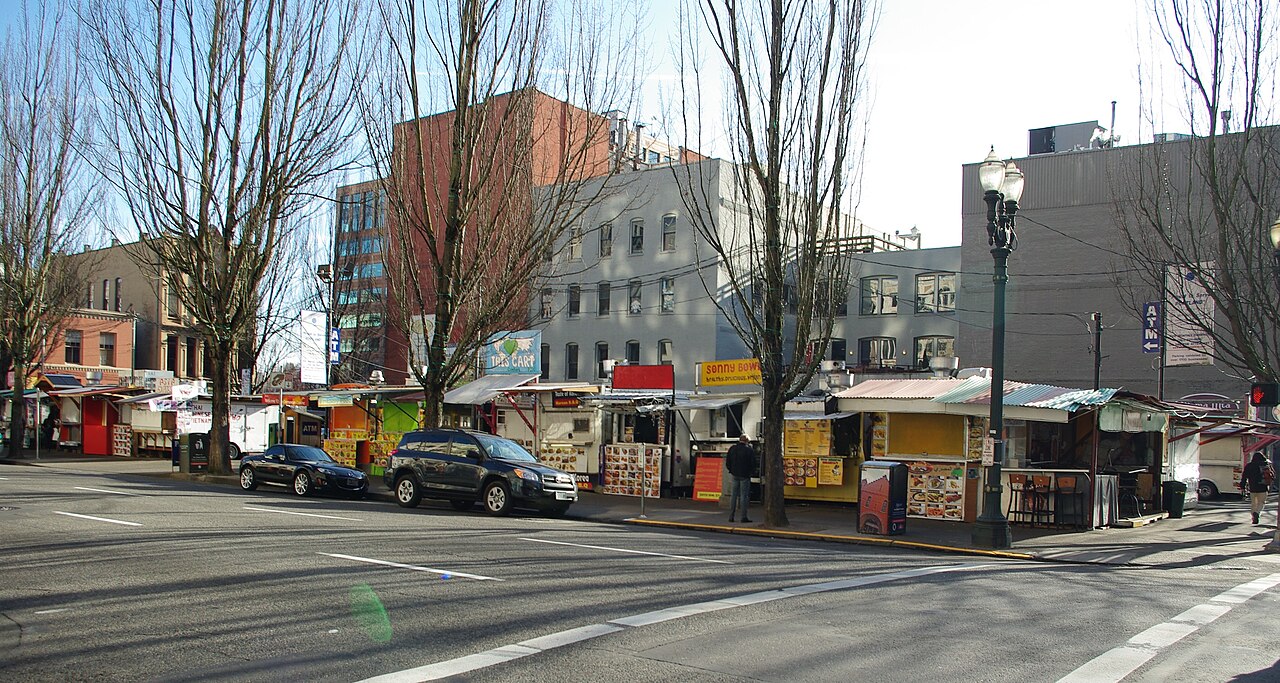
Portland's most influential restaurant format came without walls. The food cart pod — a cluster of trailers and tiny kitchens around shared tables, usually on a parking lot's worth of land — became the city's culinary signature in the 2000s, and at its height hundreds of carts operated across the metro area, a food scene built from converted trailers and rents a brick-and-mortar kitchen could never match.
The economics explain the creativity. A cart costs a fraction of a restaurant to launch, which let immigrant cooks, young chefs, and specialists of every narrow cuisine — regional Thai, Georgian dumplings, Egyptian street food, vegan barbecue — take their shot in public. Portland's reputation for adventurous eating was written, to a remarkable degree, by people cooking in 100 square feet.
The pods have weathered a difficult half-decade. The pandemic emptied the downtown lunch trade; development pressure claimed landmark lots — the great Alder Street pod downtown was cleared in 2019 for the Ritz-Carlton tower, and the carts scattered to new ground. The scene's center of gravity moved east and multiplied: pods with heated seating, beer gardens, and fire pits now anchor neighborhoods from St. Johns to the Division/Clinton corridor.
What survived is the format's essence: low rent, high turnover of ideas, and a dining room that belongs to the weather. The city even counts a measure of its food culture in carts the way other cities count white-tablecloth rooms.
November is pod season for the stubborn: the carts' awnings drip, the picnic tables fill at noon anyway, and the soup carts — every pod has one worth the trip — come into their inheritance. Bring a tray, order at two windows, and eat outside in the rain like a local. It is not a compromise. It was always the design.