Roses for Optimism, Maples for Rain: Washington Park's Two Gardens
One garden tests roses for the nation; the other teaches stillness on a hillside. Washington Park's paired masterpieces are at their November best.
Washington Park keeps Portland's two most disciplined gardens a short walk apart, and they could not be more different in temperament. The International Rose Test Garden, founded in 1917, is exuberance arranged in rows — thousands of rose bushes in hundreds of varieties, planted as a working trial garden where new hybrids prove themselves. The Portland Japanese Garden, opened in 1967 on the hill above, is restraint arranged as an argument about space.
The rose garden began as a refuge: during the First World War, hybridists feared European varieties would be lost to the fighting, and Portland — already calling itself the City of Roses — offered sanctuary. The testing mission never left. AARS trials grew here for generations, the Gold Medal Garden honors the winners, and the Shakespeare Garden quotes the Bard in plantings. In November the beds are pruned back to architecture, but the view from the garden's edge — downtown framed, Mount Hood standing over it on clear days — never closes for the season.
The Japanese Garden climbs its hillside in eight distinct spaces: strolling pond, tea garden, sand and stone, natural garden, flat garden. Designed by Professor Takuma Tono of Tokyo Agricultural University, it is widely described as among the most authentic Japanese gardens outside Japan — a reputation its gardeners maintain with the discipline of a tea house, pruning pines by candlelight-season and raking gravel as practice, not chore.
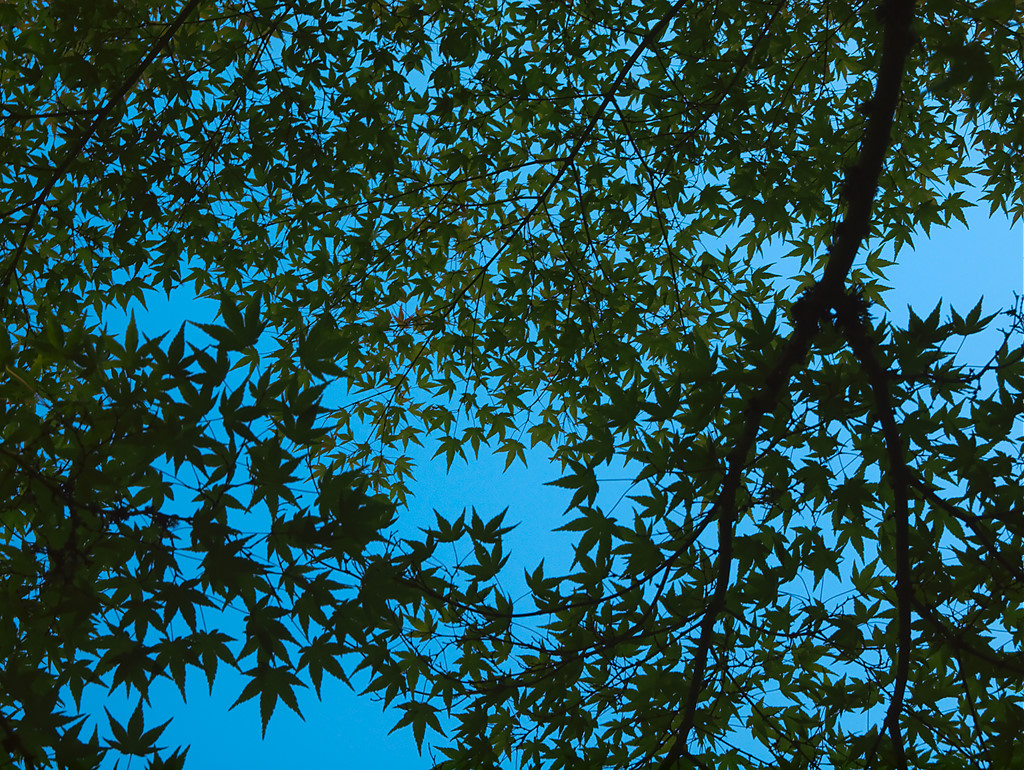
November is, quietly, its finest month. The Japanese maples that the garden's designers placed like punctuation ignite on schedule — red over still water, orange against dark pine — and the crowds thin to those who know. The flat garden's raked gravel carries the season's first maple leaves like calligraphy.
Together the two gardens make a complete Portland sentence: the roses for the city's optimism, the maples for its introspection, both of them free or nearly so to wander, both maintained as public trust. The rain begins either way. In Washington Park, it has something beautiful to fall on.