
The Bridges Lift, the Freeways Crawl: Portland's Two Traffic Systems
Freeway bottlenecks at the Rose Quarter and the Banfield meet a river that still opens its bridges at noon: the two traffic systems of Portland, and the trains that thread between them.
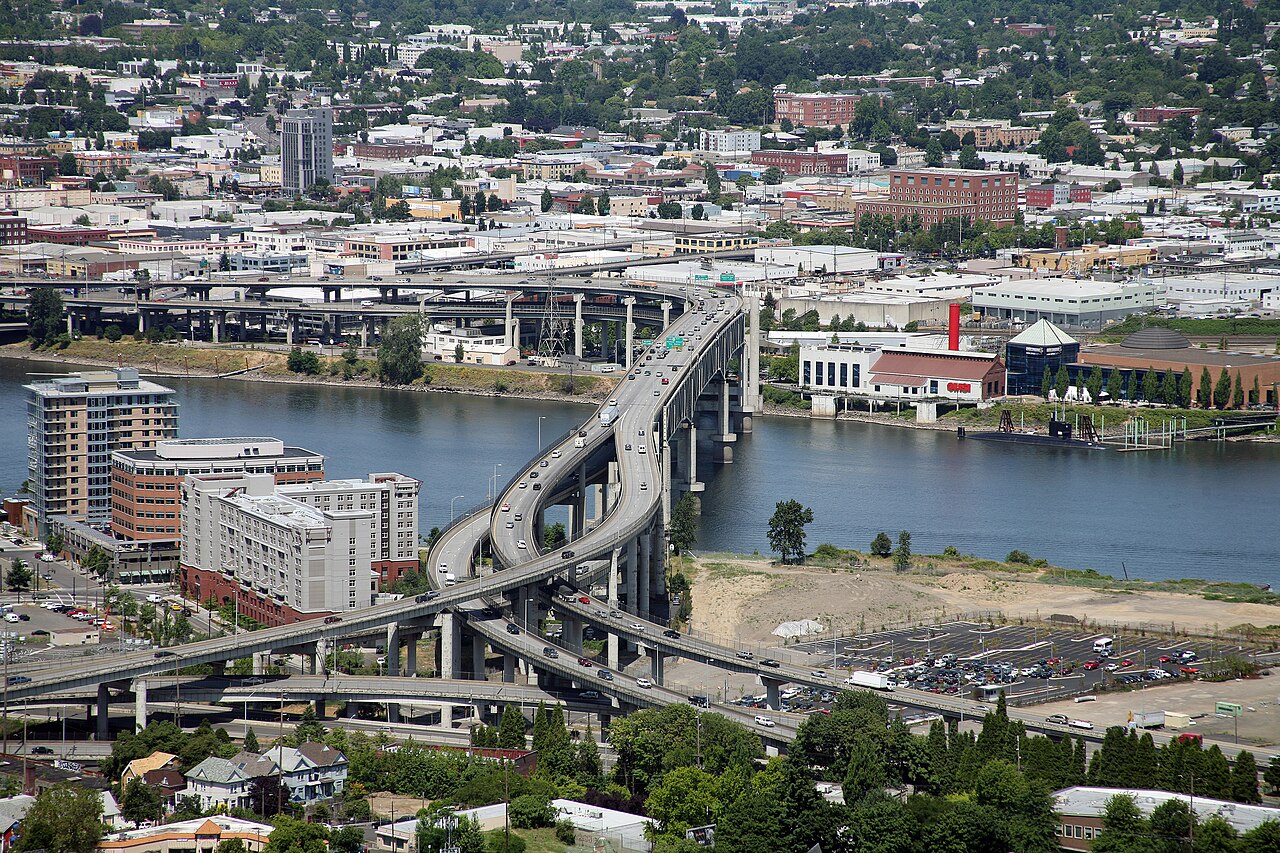
Portland traffic runs two systems that periodically stop each other. The first is the familiar one — I-5 and I-84 braiding through the east side, the I-405 loop around downtown, I-205 carrying the east's through traffic — and the second is older: a working river whose bridges must open, in the middle of the city, in the middle of the day.
The bridge lifts are the negotiation. The Broadway, Morrison, Hawthorne, and Steel bridges all lift for river traffic; federal rules restrict the lifts during commute peaks, but midday and evening openings remain a fact of cross-river life, announced by bells and gates and absorbed by drivers with a resignation visitors find either charming or maddening. A single lift can cascade across the downtown grid for twenty minutes; the city plans around them the way coastal cities plan around tides.
The Banfield — I-84's run along Sullivan's Gulch — is the system's chronic patient: the region's most congested freeway segment by most measures, hemmed in by the gulch's walls and the rail lines sharing it, where TriMet's MAX trains glide past the freeway's worst hours on their own right of way. The Rose Quarter's I-5 bottleneck, two lanes through the city's heart, has been the subject of an expansion-and-cover project debated for two decades and still being designed, litigated, and argued in public.
The region's answer, such as it is, has always been plural: MAX light rail now spans the metro in five lines, the streetcar loops the central city, and the bus network fills the rest — even as driving remains the majority habit the freeways must carry. The metro's transportation politics are a permanent session, conducted in the language of induced demand and freight mobility.
For the driver, November adds the season's texture: wet pavement, early darkness, leaf-slick side streets, and the Gorge wind's first appearances on I-84. The bridges will lift, the Banfield will crawl, and the trains will run through both facts at speed. Portland did not so much solve its traffic as agree, permanently, to argue about it in public.